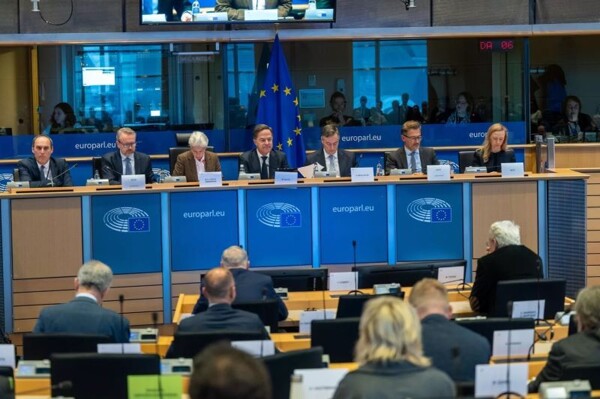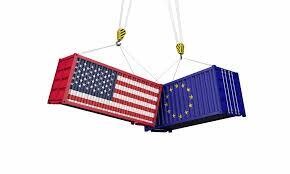
The European Union has expressed its concern about the possibility that President Donald Trump may impose tariffs, after recently announcing a 25% increase in tariffs on Canada and Mexico, and a 10% increase on products from China. Although the application of the tariff on Mexico was postponed by a month, uncertainty and fear of an escalation of trade tensions have marked the discussions in the region.
In a press conference, French President Emmanuel Macron mentioned that Europe, as an economic power, must command respect and react in case of attacks in the trade sphere. Concern over Trump's tariffs was a central theme during the summit, even though transatlantic relations took a back seat.
NATO Secretary General Mark Rutte underscored the interdependence between Europe and the United States by insisting that European defense without U.S. support will not work. Meanwhile, Kaja Kallas, the EU's High Representative for Foreign Affairs, emphasized the importance of the transatlantic relationship by stating that both sides need each other and that tariffs only generate additional costs without benefits for employment.
At a luncheon during the summit, the importance of maintaining a firm stance against possible tariff measures by Trump was discussed. British Prime Minister Keir Starmer expressed confidence that tariffs would not be imposed on the United Kingdom, after agreeing on possible solutions with the U.S. president.
At the national level, the Spanish government has urged the EU to remain vigilant in light of Trump's statements, who has criticized the trade relationship with Europe on several occasions. Despite the uncertainties and tensions generated by the threat of tariffs, European leaders have committed to strengthening community defense and exploring ways to enhance international partnerships amid a scenario marked by trade uncertainty.