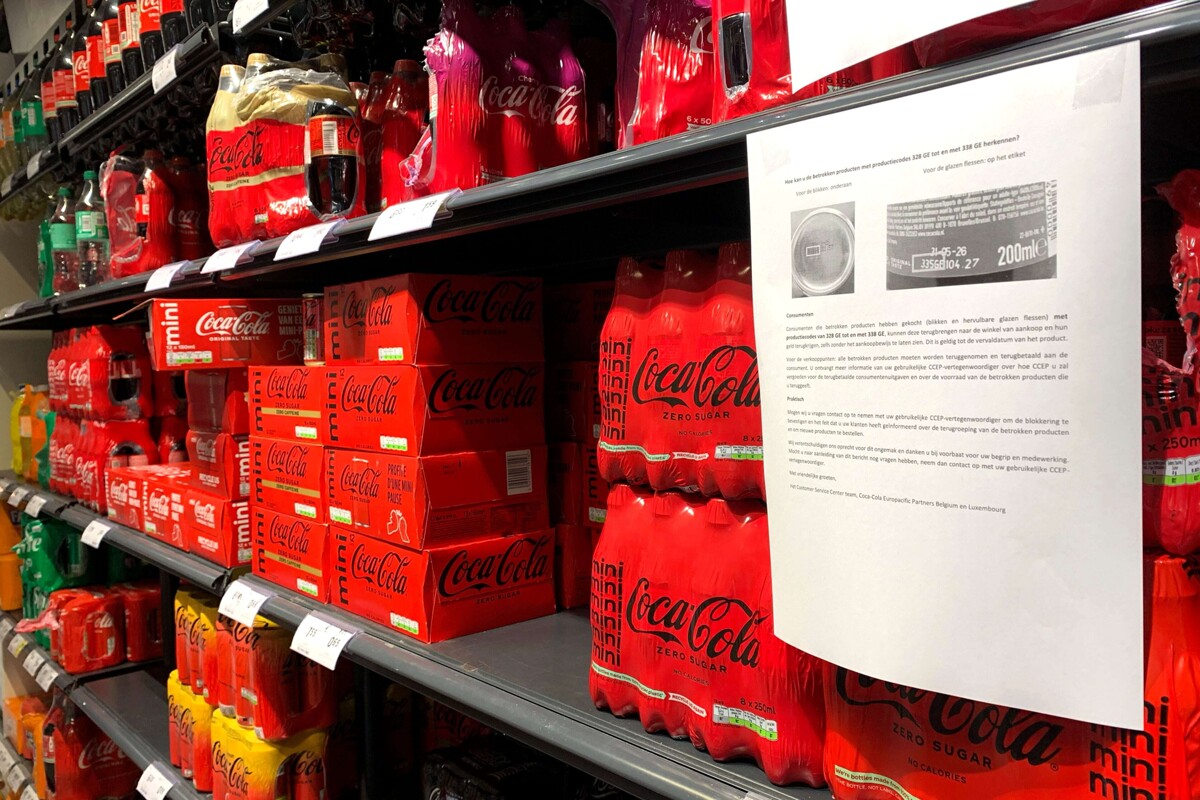
A well-known cola beverage company has withdrawn certain soft drinks from the market in Europe after detecting higher than usual levels of a chemical substance called chlorate in bottles and cans produced at a factory in Belgium. Several beverages, such as Coca-Cola, Fanta, Sprite, Minute Maid, and Fuze Tea, were pulled from the market in Belgium, Luxembourg, and the Netherlands, according to the company's official announcement on Tuesday.
Health authorities in Denmark, Portugal, and Romania received alerts through the European Union's rapid alert system to investigate whether the soft drinks distributed by stores or vending machines could be contaminated with chlorate, a risk classified as "serious." This chemical compound can originate from chlorine disinfectants used in water purification for food processing and is associated with potential health issues, especially in children, by interfering with thyroid gland function.
Coca-Cola identified the problem in a specific container used in its water treatment method at its plant in the city of Ghent during regular safety inspections. It recommends that customers not consume beverages from the affected batches and return them for a refund. "We apologize to consumers and our business partners," the company stated.
Toxicology experts indicate that a significant intake of chlorate would be necessary to experience serious effects, and it is unlikely that such amounts are present in the products. The recall affects products with production codes from 328 GE to 338 GE, and the company is in contact with authorities in other European markets where limited stocks were distributed.
In summary, the recall of the affected soft drinks took place in Belgium, Luxembourg, and the Netherlands after elevated levels of chlorate were discovered in the products. The company has asked consumers to return the products and has offered refunds while continuing to cooperate with the relevant authorities in various European markets.